Blog
What would you like to learn about today?
Q4 Readiness, Part 2: Messaging & Creative
Landing in front of the right audience is only half the job. Once you've got their attention, you need to give them a reason to keep it.
Q4 is loud. Everyone's got an offer, a deadline, or a reason to buy now. The brands that break through aren't the ones saying the most; they're the ones saying something clear, relevant, and perfectly timed.
Q4 Readiness, Part 1: Placements & Targeting
Q4 fills up fast. More brands, less attention, higher stakes per impression. No matter your budget, there are always brands willing to spend more. What sets you apart is a sharper eye for who you're chasing, where you find them, and when.
In programmatic, that comes down to two moves: smarter placements and smarter targeting.
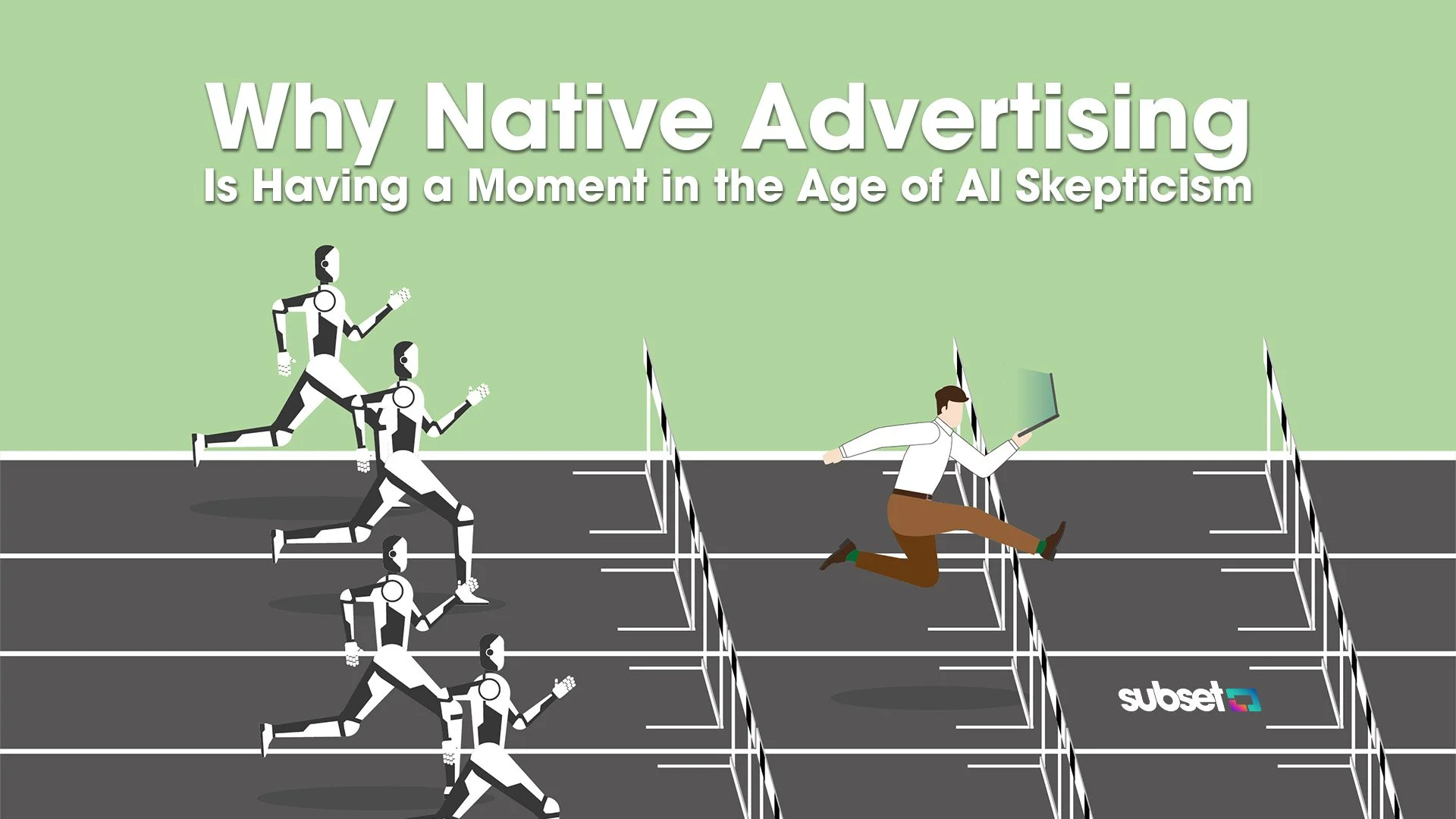
Why Native Advertising Is Having a Moment in the Age of AI Skepticism
Native advertising has always had a simple advantage: it looks like it belongs. In 2026, that quality matters more than ever.
As AI-generated copy, synthetic imagery, and increasingly automated ad experiences fill the internet, audiences are becoming better at recognizing what feels manufactured. They are also becoming less patient with it. Native advertising offers a useful counterpoint by placing brands within environments that already have an established voice, context, and audience.
That is putting native back in the spotlight, not simply as a mid-funnel engagement tactic, but as a way to build familiarity and credibility. Its real value, however, comes when it works alongside CTV, video, and bottom-funnel display across the full funnel.
Below are four use cases where native can drive performance today:

Retargeting: Maximize creative messaging to maximize results
“Retargeting is not the newest tool in the digital advertising arsenal, but it remains a performance workhorse for one simple reason: it delivers.
But the internet has become a more difficult place to get someone's attention, let alone keep it. Ad fatigue is real, screens are multiplying, and the average consumer has become remarkably good at ignoring anything that looks remotely like an ad they've already seen. Retargeting that cannot adapt to the audience risks becoming background noise.
The better approach is to treat retargeting not as a set-it-and-forget-it safety net, but as an evolving, cross-screen conversation with people who have already shown some interest.”
5 Digital Ad Trends for Q4 2026 Donation Campaigns
Right now, in August, is when Q4 donation campaigns are won or lost.
By the time October hits, ad costs are up, mailboxes and inboxes are flooded, and there's no runway left to fix a weak data set or build out optimized creative. The nonprofits that come out ahead this giving season are already prepping.
Here's what to build toward.
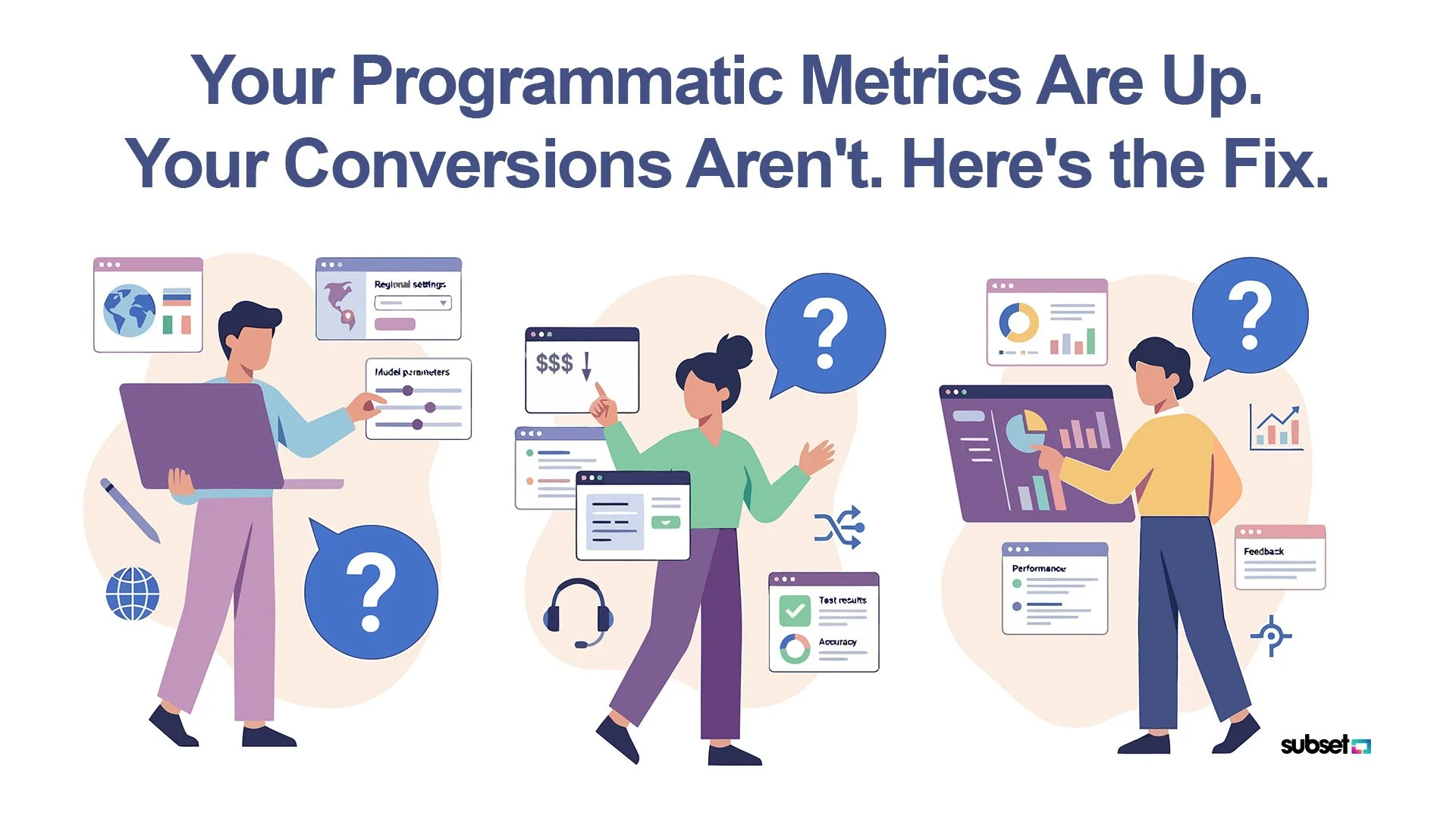
Your Programmatic Metrics Are Up. Your Conversions Aren't. Here's the Fix.
Display CTRs are the best they've ever been. CTV completion rates are strong. Native blends in, audio gets heard, video gets watched.
Time to celebrate?
Not quite.
Impressions and clicks are vanity metrics if the traffic walks away empty-handed. Unlike search, where intent is baked into the click, programmatic traffic is built on interruption rather than intent.
The real work starts when someone lands. If your pages aren't built to convert, you haven't built a demand engine — you've built a well-targeted waiting room.
Every business defines conversion differently, but the principle holds: a conversion is the action your media spend was designed to drive. Regardless of the channel, 2%+ is still the benchmark to clear. Below that, you're renting attention and letting it walk.
Here's how to close the gap.
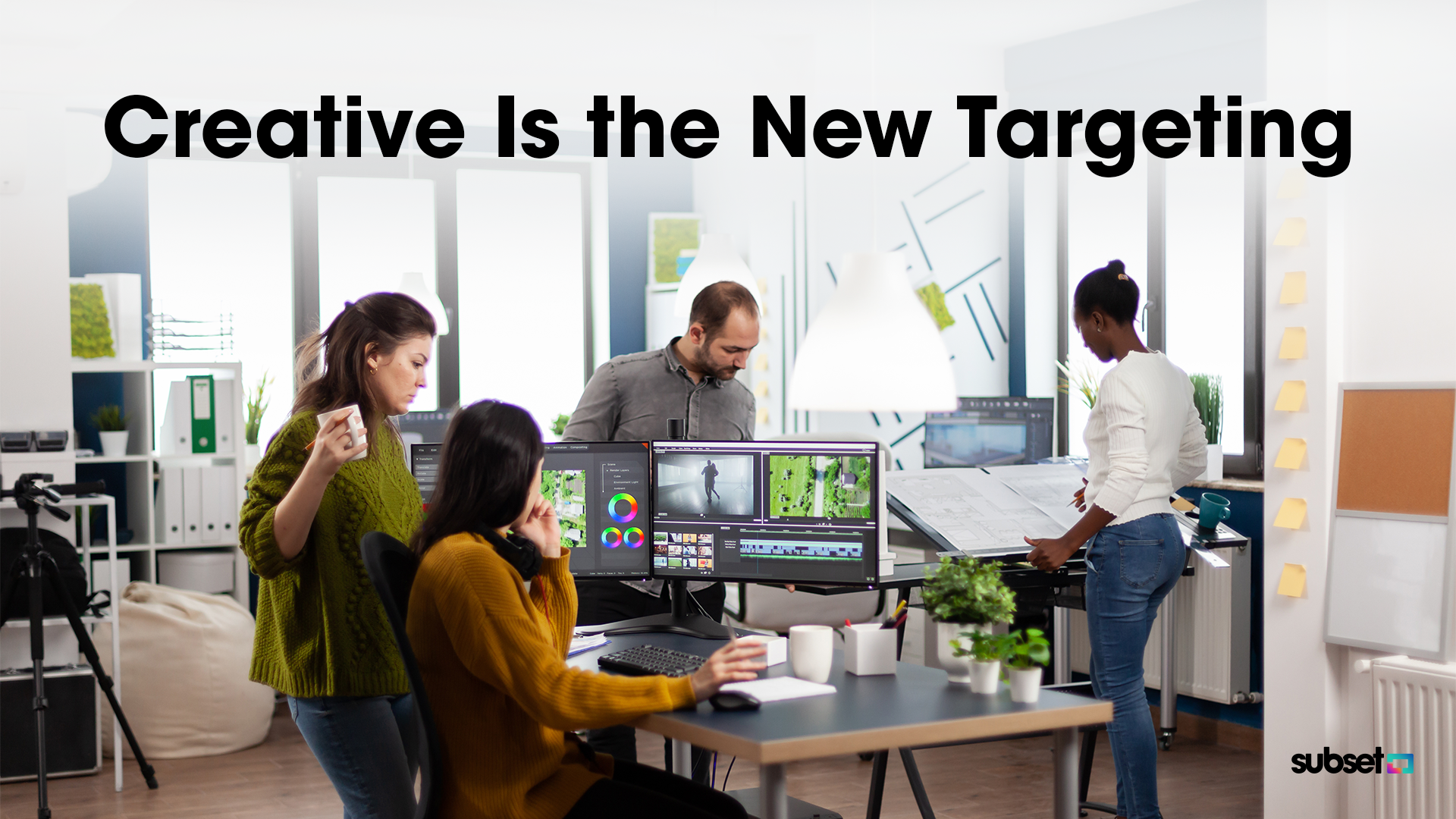
Creative Is the New Targeting
For years, digital advertising was a precision game. Audiences, placements, bids — marketers obsessed over all of it. Creative was an afterthought, the file you uploaded right before the algorithm took the wheel.
That era's over.
Meta, Google, and every major programmatic platform now increasingly automate audience discovery and media optimization. So the one lever marketers still control — the one thing left that's actually theirs — is the message. And increasingly, it's also the signal platforms use to decide who sees an ad in the first place.
The question isn't "who's our audience?" anymore. It's "do we have anything worth the algorithm's attention?"
The Marketing Funnel Isn't Missing the Plot, But Its Story Is Shifting
Customer acquisition used to follow a familiar plot: capture attention, drive engagement, and finally create an intent to act. Advertisers built careers on that plot, timing the right ad to the right chapter.
The plot still holds — awareness leads to cultivation, cultivation leads to intent, intent leads to action. What's changed is the shape of it. Ask someone how they bought their last pair of shoes and you won't get a straight line. You'll get a scramble: a video half-watched on a bus, a chatbot comparison, a friend's offhand tip, a search summary that answered the question before they'd finished typing it. Somewhere in that scramble, the same old journey is playing out. It's just playing out everywhere at once.
Credit Where Credit's Due: What the World Cup Can Teach Digital Advertisers About Attribution
In digital advertising, everybody wants the credit. Sound familiar? It's the same story on the soccer pitch. The striker who buries the ball in the back of the net gets the headlines, the highlight reel, the fan chants. But soccer knows better than to let the goal-scorer hog the spotlight — because that goal didn't happen in a vacuum.
That's why the sport's analytics revolution — think expected goals, possession chains, buildup value — has pushed teams to credit not just the finish, but everything that created it. A player earns credit for the goal. The teammate who delivered the final pass earns credit too. And increasingly, so do the players whose vision, passing, and movement built the attack in the first place.
Goal, assist, build-up — each one matters. Each one contributes to the outcome.
The best digital marketing campaigns are starting to think the same way. It's time to give credit where it's due.
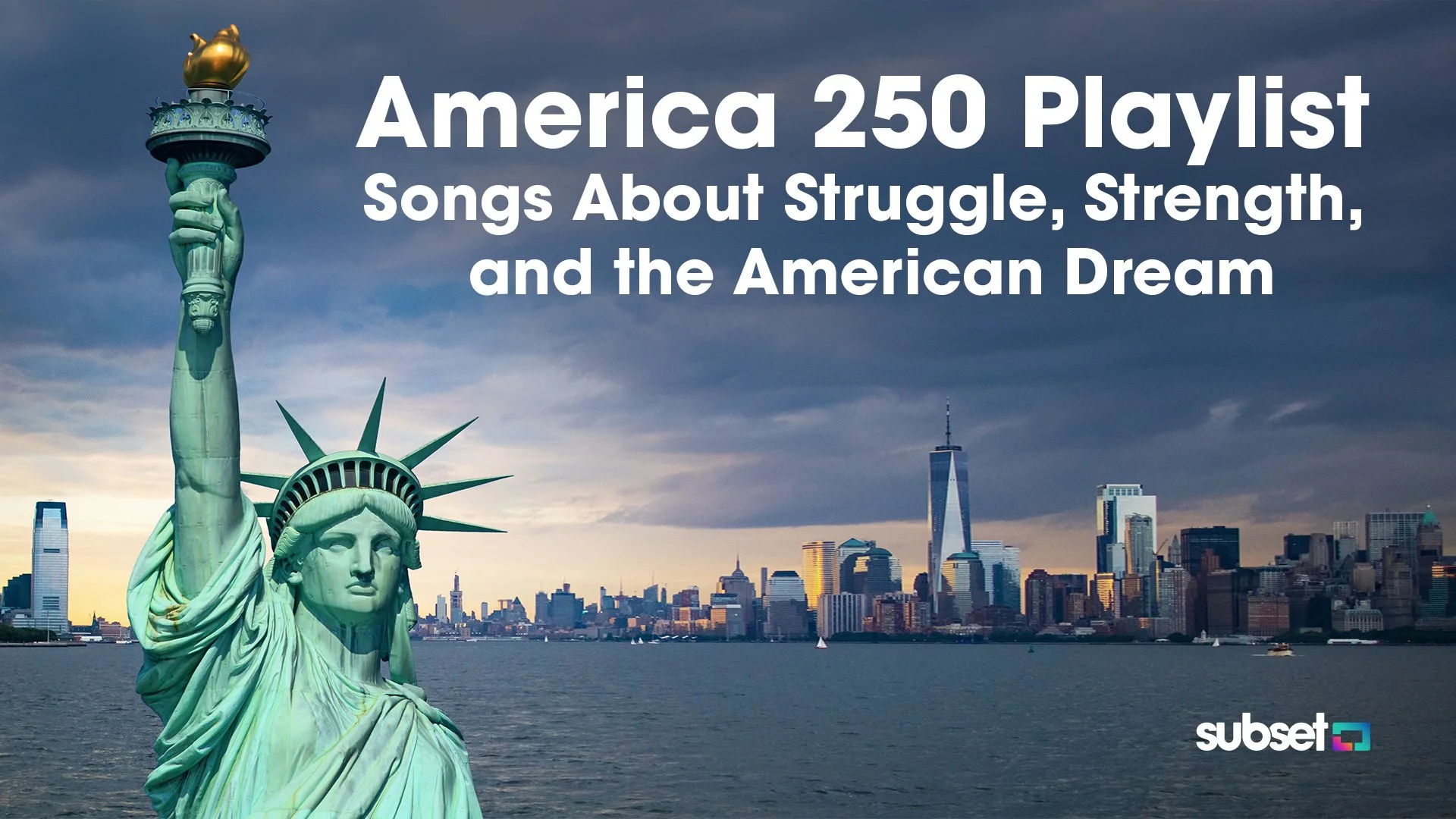
America 250 Playlist
This July 4, 2026, marks a quarter millennium of the American experiment. In just 250 years, the United States has seen extraordinary growth, endured adversity, and achieved remarkable things.
To mark the occasion, this playlist traces the country's highs and lows through the music that reflects them. You won't find American Pie here. Instead, you'll hear the pulse of a nation—and the voices that have defined it and will continue to do so.
5 Programmatic Trends Shaping the Second Half of 2026
We're only halfway through what is already a defining year for advertising. Global ad spend is projected to surpass the $1 trillion mark for the first time, while the Olympics, FIFA World Cup, and a U.S. midterm election cycle are creating a rare convergence of mass-attention moments that continue to drive premium media demand. Against that backdrop, programmatic investment in the U.S. alone is expected to exceed $220 billion.
The first half of the year brought meaningful momentum. The second half will reveal which shifts have staying power and which will reshape the industry for years to come.
The World Cup Is Bigger Than the Broadcast
American advertisers love to say nothing tops the Super Bowl. They're wrong.
The Super Bowl is a masterpiece of American marketing mythology. With $7 million for a 30-second ad slot and halftime shows featuring the world’s top rock stars, it is a cultural ritual. We get it. We love it.
But there is a sporting event so vast, so globally all-consuming, that the Super Bowl shrinks in its shadow. And this summer it's coming back to our backyard.
The FIFA World Cup returns to North American soil for the first time since 1994. The 2026 version is bigger, louder, and more watched than anything that's ever existed in the history of televised sport. Forty-eight teams. Sixteen host cities spread across the U.S., Canada, and Mexico. And an audience that doesn't just tune in — it stops the world.
Crafting call-to-action buttons that convert
To click or not to click, that's the proverbial question, and the answer often comes down to a surprisingly small piece of digital real estate.
Measuring just a few pixels high and a few more than that wide, it's often a simple button that uses brief copy and bold color to push users toward a single decision: taking the next step. Your CTA is the bridge between interest and action.
Almost like the velvet rope of digital advertising: positioned well, it ushers people forward with confidence. Positioned poorly, it leaves them wandering, confused, and quietly resentful.
The best CTAs make the next move feel obvious, even inevitable: useful, low-risk, almost seductive. The worst leave users with a vague sense of being had.
And while the CTA may take different forms across channels, the objective never changes. Whether it's a button embedded in a display ad, native placement, or paid social campaign, a prompt delivered through digital audio, a message flashed on a CTV screen, or the conversion point on the landing page that follows, every CTA is designed to answer the same question: What should the audience do next?
Here are 10 tips for crafting CTAs that truly connect.

The Quiet Power Shift in Media Plans Isn’t Happening on a Screen
Digital audio has long been advertising’s quieter achiever: intimate, habitual, and deeply woven into consumers’ routines. Yet in 2026, as marketers chase the glamour and rising costs of connected television, audio is emerging as one of the industry’s more efficient and underappreciated opportunities…